
Uganda’s poultry industry is growing quickly as egg consumption continues to increase in cities and rural areas. Eggs are one of the most affordable sources of protein for many families, and commercial poultry farms are expanding to meet this demand. According to the Food and Agriculture Organization, poultry production plays a key role in improving food security and rural income across East Africa.
For farmers planning to raise 10,000 to 50,000 laying hens, choosing the right production system is critical. A poultry layer cage system has become one of the most efficient solutions for commercial egg farming in Uganda. Compared with traditional floor systems, poultry layer cages help farmers increase productivity, reduce labor, and manage large flocks more effectively.
This guide explains how poultry layer cage systems in Uganda, how much they cost, how farms are designed, and includes a real project case to help new investors understand the process.
What Is a Poultry Layer Cage System?
A poultry layer cage system is a structured housing system designed for laying hens where chickens are kept in organized cages arranged in rows and tiers. Each cage compartment holds several birds, allowing farmers to manage thousands of chickens in a controlled environment.
Modern cage systems include supporting equipment such as:
-
Automatic drinking systems
-
Feeding systems
-
Egg collection systems
-
Manure removal systems
-
Ventilation equipment
This structure allows farms to produce large quantities of clean eggs while maintaining better hygiene and efficiency.
Why Are Poultry Layer Cages Becoming Popular in Uganda?
Many poultry farms around Kampala, Mukono, and Lira are switching to cage systems as their production scale increases.
Here are the main reasons.
1. Higher Egg Production
In a poultry layer cage, each hen receives equal access to feed and water. This reduces stress and competition among birds, leading to more stable egg production.
Typical advantages include:
-
Higher laying rate
-
Better feed conversion
-
Lower egg breakage rate
-
Easier egg collection
Commercial farms using cage systems can achieve more consistent production compared with traditional deep litter systems.
2. Better Disease Control
Disease outbreaks are one of the biggest risks in poultry farming. In deep litter systems, chickens constantly walk on manure, which can spread bacteria and parasites.
A poultry layer cage system separates birds from manure, helping reduce disease transmission. Manure can be removed regularly, keeping the poultry house cleaner and improving air quality.
3. More Efficient Land Use
Land prices near large cities are increasing. Poultry cages allow farmers to raise more chickens in a smaller building.
For example:
| System | Chickens per 100 m² |
|---|---|
| Deep litter | 800 – 1,000 |
| Poultry layer cage | 2,500 – 3,000 |
This means farmers can triple production without expanding the farm area.
What Type of Poultry Layer Cage Is Best for Farms in Uganda?
Farmers usually choose between two main cage types depending on their budget and farm size.
A-Type Poultry Layer Cage
A-type cages are widely used in small and medium-scale farms.
Main features:
-
3 or 4 tiers
-
120–160 chickens per cage set
-
Simple installation
-
Lower investment cost
Many farmers starting with 10,000–20,000 layers prefer this system because it is economical and easy to manage.

H-Type Poultry Layer Cage
H-type cages are designed for large-scale automated farms.
Advantages include:
-
Higher stocking density
-
Automatic chicken layer feeding equipment
-
Automatic layer egg collection equipment
-
Automatic manure removal equipment
These systems are suitable for farms with 30,000 layers or more.
Professional poultry equipment suppliers like LIVI Poultry Equipment provide both cage types depending on farm scale and budget.
How Much Does a Poultry Layer Cage Cost in Uganda?
One of the most common questions from farmers is about the price of a poultry layer cage system.
The cost depends on several factors:
-
Number of chickens
-
Cage type
-
Automation level
-
Transportation cost
Typical investment estimates are shown below.
| Farm Size | Estimated Cage Equipment Cost |
|---|---|
| 10,000 layers | $10,000 – $18,000 |
| 20,000 layers | $20,000 – $28,000 |
| 50,000 layers | $50,000 – $150,000 |
These prices usually include cages, feeders, and drinking systems but exclude poultry house construction.
How Is Poultry Equipment Transported to Uganda?
Most poultry cage equipment imported into Uganda is transported through the port of Port of Mombasa.
The typical logistics process includes:
-
Equipment manufacturing (7–15 days)
-
Sea transportation to Mombasa (25–35 days)
-
Truck delivery from Mombasa to Uganda
Professional suppliers usually assist farmers with shipping documentation and customs clearance.
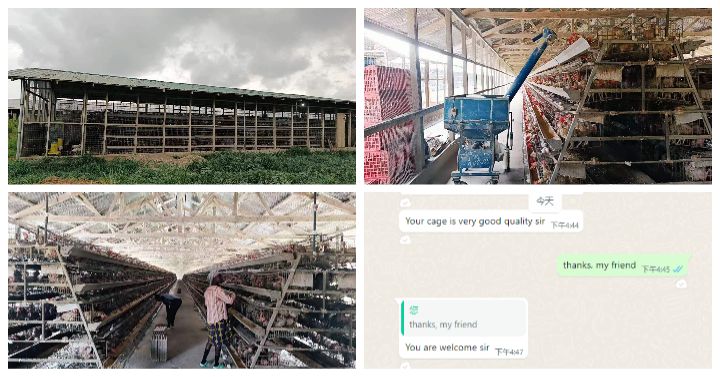
20,000 Layers Poultry Layer Cage Farm in Uganda
To better understand how cage systems work in practice, here is a project example provided by LIVI Poultry Equipment.
Project Location
City: Gulu
Farm capacity: 20,000 layers
Chicken House Design
The farm built two poultry houses with the following dimensions:
-
Length: 68 meters
-
Width: 8 meters
-
Height: 4 meters
Each house contained:
-
Two rows of poultry layer cages
-
40 cage units per row
-
Total capacity per house: 10,000 chickens
Equipment Configuration
The farm installed the following systems:
-
Automatic nipple drinking system
-
Feed trough feeding system
-
Manure cleaning system
-
Ventilation fans
Installation Timeline
Installation of the entire poultry layer cage system took approximately 18 days.
The process included:
-
Cage frame installation
-
Drinking system setup
-
Feeding equipment installation
-
System testing and adjustment
After installation, the farmer placed 18-week-old pullets into the cages and began egg production within a few weeks.

How to Choose a Reliable Poultry Layer Cage Supplier
Choosing a high-quality supplier is very important for long-term farm success.
Farmers should consider the following factors.
1. Cage Material
High-quality cages use hot-dip galvanized steel, which can resist rust for 15–20 years.
2. Cage Design
Good cage design improves:
-
Egg rolling efficiency
-
Ventilation
-
Bird comfort
This reduces egg breakage and improves productivity.
3. Technical Support
Reliable poultry equipment companies should provide:
-
Farm layout design
-
Installation guidance
-
After-sales technical support
FAQ: Poultry Layer Cage in Uganda
How many chickens can a poultry layer cage hold?
Most standard cages hold 3–5 chickens per compartment, depending on cage size and design.
Is a poultry layer cage system suitable for small farms?
Yes. Farmers starting with 10,000–20,000 layers often choose A-type poultry layer cages because they require lower investment.
How long does a poultry layer cage system last?
High-quality cages made from hot-dip galvanized steel can last 15–20 years with proper maintenance.
How long does it take to install poultry layer cages?
For a 10,000–20,000 layer farm, installation usually takes 15–25 days.
What is the best poultry layer cage system for Uganda?
For farms under 20,000 chickens, A-type cages are usually the most economical option. Large farms producing eggs at an industrial scale may prefer automated H-type systems.
Conclusion
Uganda’s egg market continues to expand as population and food demand grow. For farmers planning to build modern poultry farms, investing in a poultry layer cage system is one of the most effective ways to increase production and improve farm management.
With proper farm planning, high-quality cage equipment, and reliable technical support, poultry farmers can build profitable egg production businesses that supply eggs to major markets across the country.
Companies such as LIVI Poultry Equipment provide complete poultry farming solutions including farm design, cage manufacturing, and installation support, helping farmers successfully start or expand their poultry operations in Uganda.