
Poultry Cage System Selection Guide
Types of Cage System in Poultry Farming: How to Choose the Right Cage for Your Farm
The main types of chicken cage system in poultry farming include A-type layer cages, H-type layer cages, pullet rearing cages, broiler cages, and fully automatic poultry cage systems. The right choice depends on bird type, farm capacity, house size, labor plan, climate, manure handling, egg collection, and automation level.
For layer farms, Livi Machinery usually recommends the Livi A-Type Layer Cage for 10,000–30,000 layers and the Livi H-Type Cage System for 30,000–300,000+ layers. For pullet and broiler projects, the cage system should be selected according to growth stage, stocking density, ventilation demand, and daily operation method.
Which poultry cage system should I use?
Layer, pullet, broiler, automatic cage systems
A-type and H-type layer cages
Choose by bird type, capacity, layout, and automation

What Are the Main Types of Cage System in Poultry?
Poultry cage systems are usually classified by bird type and production purpose. A laying hen farm needs layer cages for egg production. A pullet farm needs brooding or rearing cages for young birds before they enter the laying period. A broiler farm needs broiler cages designed for meat chicken growth and manure separation.
A practical types of cage system in poultry guide should not only list cage names. It should explain which cage type fits each farm size, what automation is needed, and how the cage system affects feeding, drinking, manure removal, ventilation, and daily labor.
Which Layer Cage System Should Be Used for Egg Production?
For egg production farms, the two main layer cage systems are A-type layer cages and H-type layer cages. The selection should be based on farm capacity, land size, house width, labor cost, automation target, and future expansion plan.
The Livi A-Type Layer Cage is suitable for starter and medium farms. The Livi H-Type Cage System is suitable for large farms that need higher density, automatic feeding, belt manure removal, the Livi Automatic Egg Collection System, and mechanical ventilation.

How Are Pullet Cage Systems Different from Layer Cages?
Pullet cage systems are used before hens enter the laying period. Their main purpose is to raise chicks and pullets with uniform body weight, stable drinking access, controlled feeding, proper heating, and good ventilation. The design focus is different from layer cages because young birds need more precise temperature and growth management.
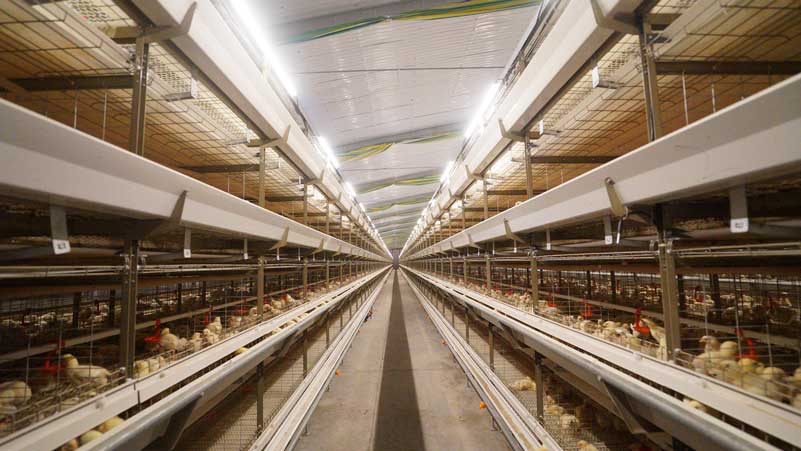
A pullet project should consider chick age, transfer age, stocking density, heating method, lighting program, water pressure, and manure handling. For this reason, pullet cages are usually planned together with brooding equipment and environmental control.
When Should a Farm Use Broiler Cage Systems?
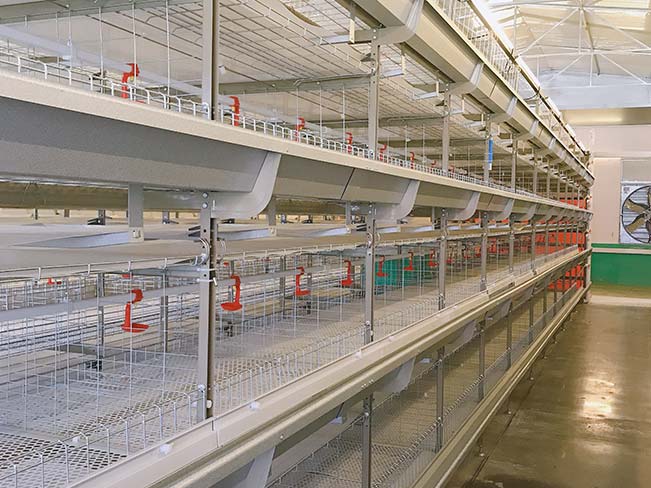
Broiler cage systems are used for meat chicken production. The purpose is to improve space utilization, separate birds from manure, reduce floor litter problems, and make feeding, drinking, ventilation, and manure removal more standardized.
A broiler cage project should focus on growth cycle, bird weight, feeding access, drinking access, ventilation, manure removal frequency, and catching method. Compared with layer cages, broiler cages are designed for shorter growing cycles and heavier bird movement.
Main Use
Raising broilers for meat production with better space use and cleaner manure handling.
Key Equipment
Broiler cages, automatic drinking, feeding, manure removal, ventilation, cooling pads, and lighting.
Design Focus
Bird weight, cage strength, airflow, manure removal, and convenient catching after the growing cycle.
How Does Automation Change Poultry Cage System Selection?
Automation changes the cage system from a simple bird housing structure into a complete poultry production line. For small farms, automatic drinking may be enough at the beginning. For medium and large farms, automatic feeding, manure removal, egg collection, ventilation, cooling, and environment control become more important.
Livi Machinery recommends designing automation together with the cage layout. The Livi Poultry Farm Layout Solution connects cage rows, feed route, water lines, manure outlet, egg collection direction, fans, cooling pads, and electrical control into one complete plan.
How Many Cage Sets Are Needed for Different Poultry Farm Sizes?
Cage quantity should be calculated before selecting automation or asking for a quotation. For layer cage projects, the formula is: total birds divided by birds per cage set.
Formula: Total Birds ÷ Birds Per Set = Required Cage Sets
How Should Buyers Choose the Right Poultry Cage System Step by Step?
Buyers should choose the cage system before finalizing the chicken house design. Cage type, row arrangement, aisle width, ventilation direction, manure outlet, egg room, feed silo, and electrical control should be planned together.
Step 1: Confirm Bird Type
Decide whether the farm is for layers, pullets, broilers, or a combined rearing and laying project.
Step 2: Confirm Capacity
Confirm bird quantity such as 10,000, 20,000, 30,000, 50,000, or 100,000+ birds.
Step 3: Select Cage Model
Use A-type cages for smaller layer farms and H-type cages for larger automatic layer farms.
Step 4: Match Automation
Choose feeding, drinking, manure removal, egg collection, ventilation, cooling, and control systems.
What Daily SOP Should a Poultry Cage Farm Follow?
A poultry cage system reduces repetitive labor, but daily inspection is still necessary. Workers should check birds, feed, water, manure, egg collection, ventilation, lighting, and equipment records every day.
FAQ About Types of Cage System in Poultry
What are the main types of poultry cage systems?
The main types include A-type layer cages, H-type layer cages, pullet rearing cages, broiler cages, and fully automatic poultry cage systems. Layer cages are used for egg production, pullet cages are used for chicks and young hens before laying, and broiler cages are used for meat chickens. The correct choice depends on bird type, farm capacity, house size, labor plan, and automation level.
Which cage system is suitable for laying hens?
For laying hens, A-type and H-type layer cages are commonly used. The Livi A-Type Layer Cage is suitable for 5,000–30,000 layers because it has lower initial investment and easier installation. The Livi H-Type Cage System is suitable for 30,000–300,000+ layers because it saves land and supports automatic feeding, manure removal, egg collection, and ventilation control.
What is the difference between A-type and H-type cages?
A-type cages have a more open structure and are suitable for small and medium layer farms. They are easier to install and usually require lower initial investment. H-type cages use vertical space more efficiently and are better for large commercial farms. H-type systems work better with automatic feeding, belt manure removal, automatic egg collection, mechanical ventilation, and environment control.
How many cage sets are needed for a layer farm?
Cage quantity depends on bird capacity and birds per cage set. The formula is total birds divided by birds per set. For example, 20,000 layers using an A-type cage with 160 birds per set need 125 sets. A 50,000-layer farm using an H-type cage with 192 birds per set needs about 261 sets. Final quantity should match the house layout.
What information is needed before choosing a cage system?
Buyers should provide bird type, target capacity, country, land size, chicken house dimensions, cage type preference, automation requirements, power supply, water source, climate condition, manure handling plan, egg collection requirement, and future expansion target. With this information, Livi Machinery can prepare a customized poultry cage system types layout and equipment configuration.
Need Help Choosing the Right Poultry Cage System?
If you are comparing different types of cage system in poultry farming, Livi Machinery can provide cage model selection, cage quantity calculation, poultry house layout, automatic feeding and drinking configuration, manure removal design, egg collection planning, ventilation design, shipping support, and installation guidance according to your bird type, farm capacity, land size, climate, and investment plan.