
Uganda’s poultry industry is witnessing significant growth, driven by increasing demand for poultry products such as eggs and meat. For poultry farmers looking to scale up their operations, having a well-designed poultry house is crucial.

The Poultry Market in Uganda
Uganda’s poultry sector has been growing at an impressive rate of 7-9% annually, according to the Uganda Bureau of Statistics (UBOS). This growth is spurred by rising urbanization, increasing disposable incomes, and a growing awareness of the nutritional benefits of poultry products. The Uganda National Poultry Association (UNPA) reports that the country produces approximately 1.8 billion eggs and 130,000 metric tons of poultry meat annually.
Comprehensive Poultry House Plans for 10,000 Chickens
Designing a poultry house for 10,000 chickens requires meticulous planning to ensure optimal space utilization, ventilation, lighting, and biosecurity. Here are the key elements to consider:
-
Space Requirements
- Bird Density: The recommended bird density for layers is approximately 2-3 square feet per bird, while for broilers, it is about 1-2 square feet per bird. For 10,000 layers, this translates to a total space requirement of 20,000 to 30,000 square feet, and for broilers, it ranges from 10,000 to 20,000 square feet.
- Cage Systems: Utilizing multi-tiered cage systems can significantly reduce the footprint needed. For example, H-Type layer cages from LIVI can house multiple birds per unit, optimizing space usage.
-
House Dimensions
- Width and Length: A typical poultry house for 10,000 chickens should be approximately 75-100 feet wide and 300-400 feet long, depending on the cage system used. This allows for adequate space for cages, walkways, and equipment.
- Height: The height of the house should be at least 12-15 feet to ensure proper ventilation and ease of maintenance.
-
Ventilation
- Proper ventilation is crucial for maintaining a healthy environment. The house should be designed with adequate openings or mechanical ventilation systems to ensure a consistent flow of fresh air.
- Ventilation fans and exhaust systems can help regulate temperature and humidity levels, reducing the risk of respiratory diseases.
-
Lighting
- Adequate lighting is essential for stimulating egg production. The house should be equipped with artificial lighting systems that provide 14-16 hours of light per day.
- LED lights are energy-efficient and can be programmed to simulate natural daylight cycles.
-
Biosecurity
- Implement biosecurity measures such as footbaths, disinfectant stations, and controlled access points to prevent disease outbreaks. The house should be designed to support these measures.
- Separate areas for feed storage, egg collection, and waste management can help maintain high hygiene standards.
High-Quality Chicken Cages from LIVI Poultry Equipment Manufacturer
LIVI poultry equipment manufacturer is renowned for providing high-quality poultry farming equipment, including a variety of chicken cage systems. Here are some of the top options available:
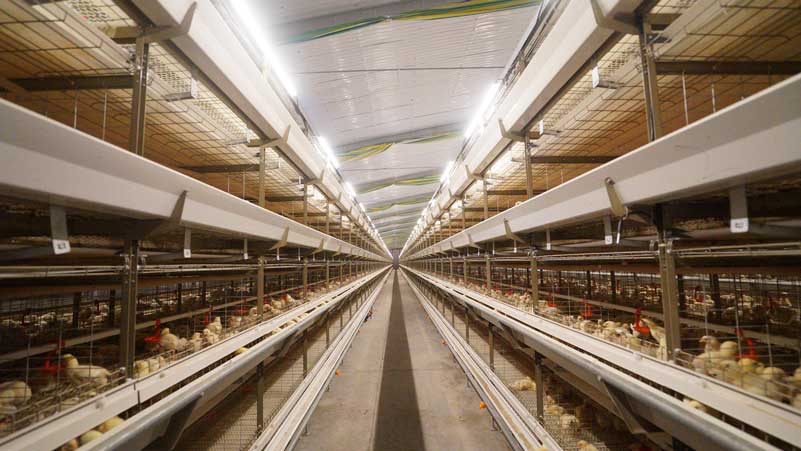
-
H-Type Layer Cages in Uganda
- Description: H-Type layer cages are designed for intensive farming, offering multi-tiered configurations that maximize space usage.
- Features: Automated feeding and drinking systems, egg collection belts, manure removal systems, and durable construction materials.
- Benefits: Increased productivity, reduced labor costs, and improved bird health and hygiene.
- Capacity: Approximately 108-288 birds per unit.
-
- Description: A-Type layer cages are ideal for small to medium-sized farms due to their balance of affordability and functionality. These cages are available in both manual and automated versions.
- Features: Feeding troughs, nipple drinkers, egg collection trays, and automated manure removal systems.
- Benefits: Cost-effective, easy to manage, and scalable for growing operations.
- Capacity: Approximately 90-160 birds per unit.
-
- Description: Broiler cages are designed to house broilers in a controlled environment, optimizing growth and health.
- Features: Automated feeding and watering systems, manure cleaning systems, and robust construction materials.
- Benefits: Optimal space utilization, improved growth rates, and enhanced biosecurity.
- Capacity: Approximately 102-136 birds per unit.