
As poultry farming in Zambia evolves from small backyard operations to structured commercial businesses, battery cage systems in poultry have become essential for farmers seeking efficiency, hygiene, and high egg or meat output. But for many, the key question remains: What kind of poultry equipment do I really need—and how should I plan my setup?
In this article, we explore the main types of poultry cage systems and equipment, offer real-world farming setup examples, and help you understand how to choose the right configuration for your budget and production goals. All equipment mentioned is provided by LIVI, a trusted global manufacturer specializing in poultry cage systems.

What Are the Main Types of Poultry Cage Systems Available?
Choosing the right poultry cage system depends on your farming goals—whether you raise layers, broilers, chicks, or breeders. Below is an overview of the most commonly used cage systems in Zambia.
1. Manual Layer Cage System
A traditional battery cage setup operated by hand. Feeding, drinking, and egg collection are manual. This system is ideal for farms with limited staff or budget, and offers simple installation and maintenance.

2. Semi-Automatic Layer Cage System
Includes automated nipple drinking systems and optional manure removal belts. Feeding and egg collection are manual. Suitable for mid-sized farms that want to improve hygiene and reduce workload.
3. Fully Automatic Layer Cage System
Designed for large-scale commercial operations. All processes—feeding, watering, egg collection, and manure removal—are automated. The system helps reduce labor costs and improves daily efficiency.
What If I Raise Broilers or Chicks?
Poultry farming in Zambia is not limited to layers. LIVI also provides complete systems for meat production and early-stage chick rearing.
4. Broiler Cage System
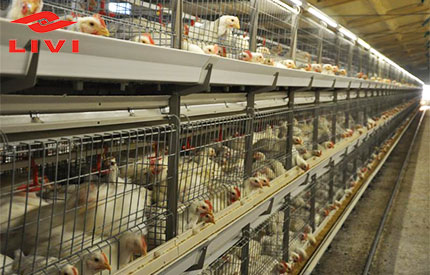
A space-saving, vertical cage system for raising broiler chickens. It improves feed efficiency and lowers disease risk by separating birds into clean, controlled units.

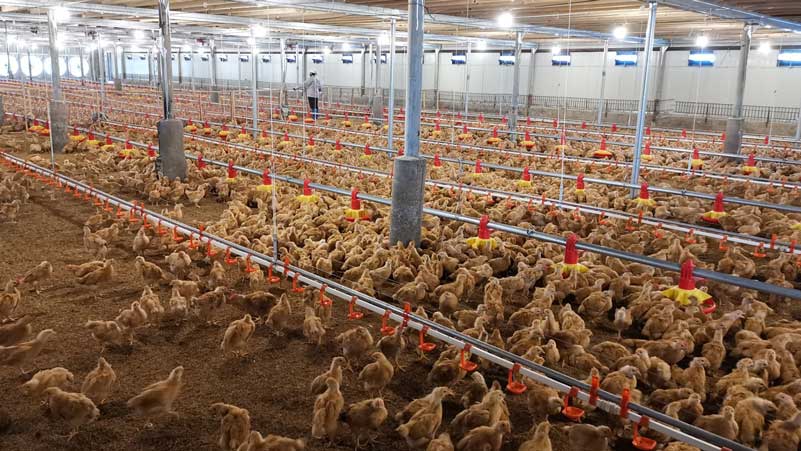
5. Flat Broiler Rearing System
Also known as deep litter systems, these open-floor setups can be equipped with automated feeding and drinking lines. Ideal for large-scale meat production farms.
6. Chick Brooder Cages
Specialized cages for rearing day-old chicks. These systems maintain a stable, warm environment and allow for precise feed and water delivery. A must-have for hatcheries or farms raising their own pullets.

What Supporting Equipment Can Boost Efficiency?
In addition to cages, modern poultry farms use various automation tools to improve productivity and reduce human labor.
-
Feed Pellet Machines – For producing your own poultry feed
-
Incubators – For hatching fertilized eggs
-
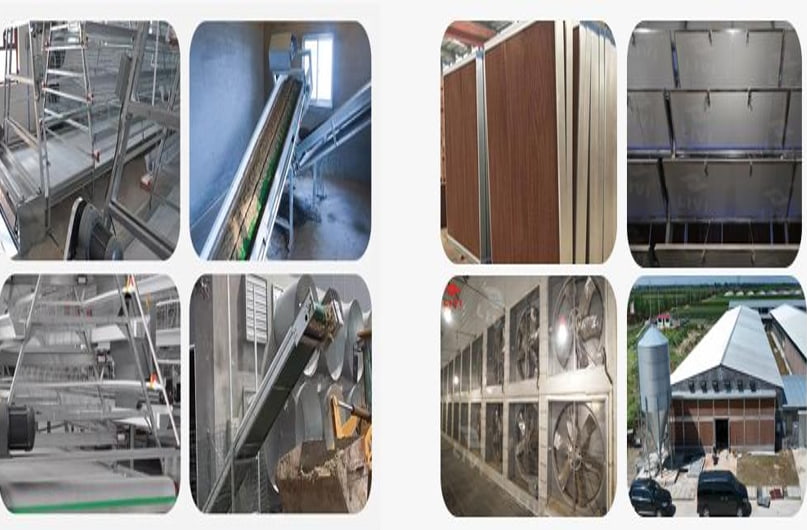
Environmental Control Systems – Fans, cooling pads, and temperature controllers
-
Automatic Feeding Systems – Conveyor belt or chain-feeding mechanisms
-
Nipple Drinking Systems – Clean, efficient water supply
-
Manure Removal Systems – Belt or scraper systems to maintain hygiene
-
Egg Collection Systems – Automated belts to collect eggs with minimal breakage
These components can be integrated into both new farms and existing buildings for greater output and lower maintenance.
What Does a Real Cage Farming Plan Look Like?
To better understand how poultry equipment is selected and arranged, here are two real-world example setups based on Zambian farms working with LIVI.
Example 1: Medium-Scale Layer Farm in Lusaka
Goal: Produce 20,000 eggs per day

Setup:
-
150 units of fully automatic H-type layer cage systems
-
Central egg collection system
-
Manure belts with scraper motors
-
Automatic feeding machine
-
Environmental control with tunnel ventilation fans
-
One feed pelletizer for on-site feed processing
Result: Improved egg production by 30%, reduced labor to 3 workers, and payback within one year of operation.
Example 2: Broiler Meat Production in Copperbelt Province
Goal: Raise 20,000 broilers per batch, six cycles per year
Setup:
-
Combination of broiler cages and flat rearing areas
-
Semi-automatic feeding and drinking system
-
Manual manure removal setup to reduce initial investment
-
One incubator for on-site chick hatching
-
Basic climate control with side wall fans and curtain ventilation
Result: Achieved stable 1.9 kg average weight per broiler in 38 days, with reduced feed conversion rate and higher hygiene control.
How Can I Get the Right Chicken Raising Equipment for My Poultry Farm?
Every farm is different. The right poultry cage system depends on:
-
Your bird type (layer, broiler, chick)
-
Your target capacity
-
The level of automation you require
-
Available budget and labor force
LIVI offers customized poultry farming solutions based on your local conditions, building dimensions, and production goals.

Conclusion: Plan First, Invest Smart
If you’re serious about poultry farming in Zambia, investing in a modern, efficient cage system is not a luxury—it’s a necessity. Whether you’re building a new farm or upgrading an existing one, LIVI provides complete support, including layout design, cage configuration, and equipment supply.
Interested in a quote tailored to your poultry project?
Contact LIVI today and receive a free consultation and custom equipment proposal—with no obligation to buy.