Uganda’s Poultry Industry Is Expanding Fast
Uganda has become one of East Africa’s most promising poultry production hubs. Rising demand for eggs and chicken meat across Kampala, Entebbe, Jinja, Mbarara, and Gulu continues to attract new poultry farm investors. As competition increases, modern poultry farming systems—especially battery cage systems for layers—are becoming essential for maximizing productivity and reducing operational costs.

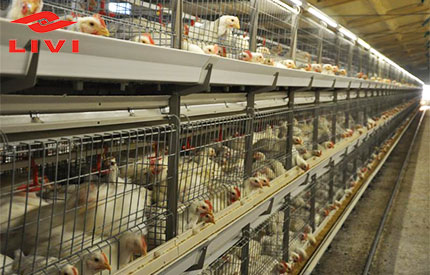
As a trusted international manufacturer, LIVI Poultry Equipment supplies high‑performance battery cages for sale in Uganda, engineered to deliver efficiency, hygiene, and long‑term durability. Our equipment is designed to help Ugandan farmers increase egg output, reduce feed expenses, and run profitable large‑scale poultry operations.
This comprehensive guide explains poultry farm equipment cost in Uganda, available cage types, benefits of upgrading to modern poultry cage systems, and factors to consider before purchasing.
Why Ugandan Farmers Prefer Battery Cage Systems
Traditional deep‑litter farming remains common in Uganda, but it presents challenges such as rapid disease transmission, feed loss, inconsistent egg quality, and high labor costs. Battery cage systems provide significant advantages:
-
Optimized space utilization
-
Higher laying rates and cleaner eggs
-
Reduced disease and bird mortality
-
Controlled environment for better management
-
Automated manure disposal and feeding options
With rising production standards, supermarkets and egg distributors increasingly prefer eggs from cage‑farmed layers, encouraging farmers to modernize.
Poultry Farm Equipment Options Available in Uganda
LIVI provides multiple poultry cage system solutions to suit small family farms, medium enterprises, and large‑scale commercial operations.
1. Layer Battery Cage System
Our best‑selling solution in Uganda:
-
Houses 90, 128, or 160 layers per set
-
Hot‑dip galvanized steel for corrosion resistance
-
Optional automatic feeding & manure cleaning
-
Designed for 15–20 years of continuous use

2. Broiler Battery Cage System
Perfect for meat production farms:
-
Better stocking density
-
Lower broiler mortality
-
Faster growth rate & uniform weight gain

3. Automatic Poultry Equipment
Available add‑ons include:
-
Egg collection machines
-
Climate control & ventilation systems
-
Silo feed storage and delivery systems
-
Water filtration & medicator units
Whether you run 500 birds or 50,000 layers, LIVI offers scalable solutions tailored to Uganda’s poultry market.
Poultry Farm Equipment Cost in Uganda — Price Estimates
The cost of installing a poultry cage system varies depending on:
-
Bird capacity
-
Cage height & number of tiers
-
Manual vs. semi‑automatic vs. fully automatic system
-
Quality of galvanization and material thickness
Estimated Poultry Cage Prices in Uganda
| Farm Size | Cage System Price Range (USD) |
| 5,000–10,000 layers | $7,500 – $20,000 |
| 10,000–20,000 layers | $20,000 – $36,000 |
| 20,000–50,000 layers | $40,000 – $120,000 |
Prices exclude shipping—but LIVI offers competitive transportation to Kampala, Wakiso, Jinja, and other regions.
Investing in a high‑quality poultry cage system pays off within 10–16 months, depending on feed price and egg selling price.
Benefits of Buying Battery Cages from LIVI in Uganda
✅ Manufacturer‑direct pricing—no middlemen
✅ High‑strength, rust‑resistant steel cages built for East African climate
✅ Customized farm layout & equipment recommendation
✅ Free technical consultation before purchase
✅ On‑site guidance during installation
✅ Excellent after‑sales support & spare parts
Farmers across Uganda trust LIVI because our equipment delivers long‑term cost savings and consistently high egg production.

What to Consider Before Buying Poultry Farm Equipment in Uganda
To ensure a profitable investment, evaluate the following:
1️⃣ Production Goal — egg layer or broiler meat business?
2️⃣ Land & Housing — suitable structure, ventilation, drainage
3️⃣ Capital Budget — choose equipment that supports cash flow
4️⃣ Feed & Water Supply Management — automation improves efficiency
5️⃣ Vendor Experience & Warranty — avoid cheap, short‑lifespan cages
LIVI provides personalized farm planning and cage selection support free of charge.