
Uganda’s poultry sector is one of the fastest-growing in East Africa, supported by strong consumer demand and an expanding base of medium to large commercial farms. Yet, farms face notable challenges related to high humidity, ammonia buildup, inconsistent air movement, and variable feed and water quality. These environmental factors accelerate equipment deterioration and reduce laying performance when systems are not properly engineered.
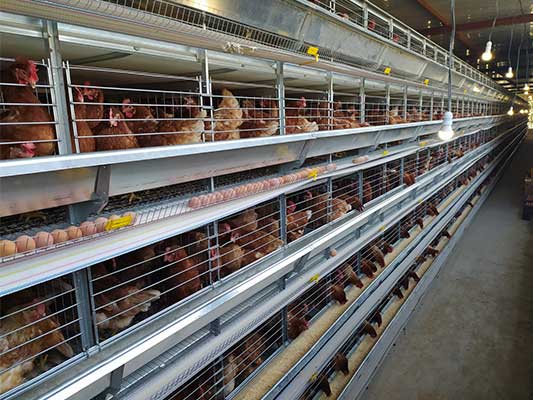
LIVI Poultry Equipment has tailored its chicken battery cage systems and automatic layer poultry farm solutions specifically for Uganda’s climate. This article provides a detailed engineering breakdown of how LIVI designs its equipment to ensure long-term durability, higher egg output, and reduced poultry farm equipment cost for Ugandan producers.

1. Addressing Uganda’s High Humidity: Structural Reinforcement and Corrosion Protection
Uganda’s humid climate places constant stress on cage materials. Rust, wire degradation, and structural weakening are common issues among locally available systems.
1.1 Double-Layer Hot-Dip Galvanization
LIVI applies an enhanced galvanization process that includes acid cleaning, rust removal, hot-dip treatment, and surface polishing. This creates a thick zinc layer that can withstand Uganda’s humid seasons.
The result is a chicken battery cage structure that maintains integrity for fifteen to twenty years, significantly reducing long-term poultry farm equipment cost.
1.2 Reinforced Cage Framework for Structural Stability
High humidity combined with warm temperatures can lead to wire expansion or sagging in low-quality cages. To prevent this, LIVI uses high-strength carbon steel and reinforced crossbars at critical load points.
The cage floor remains firm and stable, reducing pressure on birds’ feet and maintaining consistent egg roll-out angles.

2. Ventilation Adaptation: Engineering for Better Airflow and Lower Ammonia
In many Ugandan poultry houses, the main issue is poor air exchange. Without proper ventilation, ammonia levels rise quickly, affecting bird health and egg production.
2.1 Optimized Cage Arrangement for Airflow
LIVI adjusts cage row spacing, aisle width, and building layout based on the farm’s structure. Wider ventilation gaps and elevated cage floors allow more efficient air movement through the house.
2.2 Open Manure Belt System
Instead of trapping moisture, the manure belt is designed with an open discharge system that allows rapid drying. This reduces ammonia buildup and maintains cleaner air in the building.
3. Adaptation to Local Feed and Water Characteristics
Uganda’s feed often contains maize with varied particle size. Water is usually sourced from wells or municipal lines with fluctuating pressure.
3.1 Feed Trough Customized for Maize-Based Feed
LIVI modifies the feed trough depth and curve shape to prevent feed accumulation and minimize spillage of coarse particles. This improves feed conversion and reduces operational costs.
3.2 Low-Pressure Regulated Nipple Drinking System
The nipple drinking line is equipped with a pressure regulator that stabilizes water flow despite fluctuations in supply. This ensures birds always receive sufficient water during peak laying periods.

4. Automation Systems Built for Ugandan Conditions
For farms seeking an automatic layer poultry farm, LIVI provides equipment engineered for reliability even under power fluctuations and high moisture conditions.
4.1 Energy-Efficient Motors
All motors used in automatic feeding, egg collection, and manure removal systems are low-energy, reducing electricity consumption. Soft-start technology protects motors from voltage instability often encountered in rural Uganda.
4.2 Gentle Egg Collection System
The egg-collection belt is made from non-abrasive material and moves at a controlled speed. This significantly reduces egg breakage, a common issue in many local farms using cheaper collection systems.
5. Dust, Dirt, and Cleaning Efficiency
Although Uganda’s humidity reduces dust in rainy seasons, farms still experience dust accumulation during dry periods.
5.1 Polished Wire Surface
The cage mesh is polished to create a smooth, dust-resistant surface. This simplifies cleaning and prevents bacterial buildup.
5.2 Easy-Clean Manure System
The manure belt’s anti-stick coating prevents accumulation and reduces cleaning time, supporting better hygiene across the farm.
6. Installation, Training, and Technical Support in Uganda
LIVI provides comprehensive support to ensure every Ugandan farm receives equipment optimized for daily use.
6.1 On-Site Installation by Trained Technicians
Engineers offer complete installation services, including cage assembly, ventilation layout, electrical setup, and water line calibration.
6.2 Management Training
Farm staff are trained in cage maintenance, bird care in automated systems, and data-based monitoring of laying performance.
6.3 Fast Spare Parts Supply
Commonly used components such as motors and water nipples are kept in regional warehouses for quick delivery.
7. Long-Term Cost Advantages for Ugandan Farms
LIVI’s engineering approach focuses on reducing lifetime operational expenses rather than simply lowering initial purchase prices.
Advantages include:
-
Longer cage lifespan
-
Reduced feed waste
-
Lower labor requirements
-
Better air quality and bird health
-
Higher laying rate stability
-
Minimal rust-related maintenance
These features significantly reduce overall poultry farm equipment cost for Ugandan commercial farms.
Conclusion
Uganda’s poultry farms operate in challenging environmental conditions that require equipment engineered with precision and climate-specific adaptation. LIVI’s chicken battery cage systems and automatic layer poultry farm solutions provide unmatched durability, ventilation efficiency, and operational savings.
For Ugandan farms seeking reliable chicken layer cages for sale that deliver measurable performance improvements, LIVI offers a complete combination of engineering expertise, local adaptation, and long-term value.